RF422
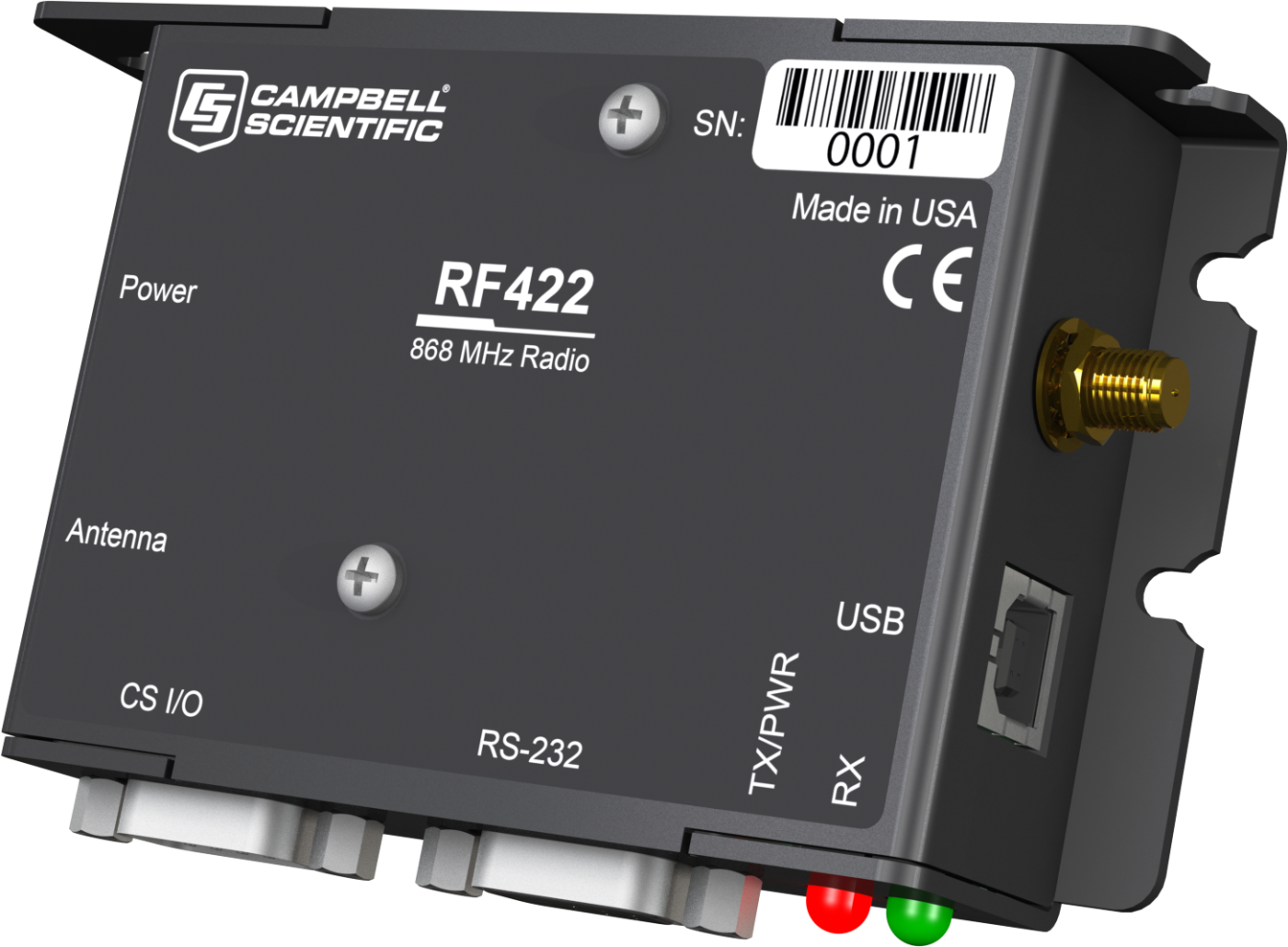
RF422
Orderable868 MHz SRD860 Radio
Overview
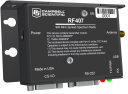
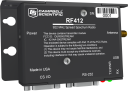
The RF422 is an 868 MHz SRD860 radio designed to provide license-free operation for wireless serial communications in Europe. The RF422 transmits data at 10 kbps with a maximum power of 25 mW, and it employs listen-before-talk (LBT) and adaptive-frequency-agility (AFA) to provide a robust link of up to 5 km (line-of-sight). The RF422 supports point-to-point and point-to-multipoint data logger communications and PakBus repeater operation.
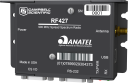
The RF422 is part of the RF407 series of radios that includes:
Technical Description
System Components
An RF422 radio needs to be at both the base station and field site. Each radio requires an antenna that does not exceed 2.1 dBi in gain over the 863 to 870 MHz frequency range, such as the 28767 whip antenna offered by Campbell Scientific.The RF422 has a reverse polarity SMA (RPSMA) connector for attaching the antenna or antenna cable.
Powering the Radio
At the base station, the radio typically uses ac power that is either supplied by the 15966 wall charger or through the PC via the USB port and cable. At the field site, the radio is typically powered by the data logger through the CS I/O port. The 14291 Field Cable can also be used to connect the radio to an appropriate 12 Vdc power supply. This field cable is required when the radio is connected to the data logger’s RS-232 port instead of the CS I/O port.
Benefits
- Does not require individual operational license in Europe
- Robust serial communication, optimized for PakBus networks
- Low power (< 2 mA idle) during periods of inactivity
- Supports point-to-point with RF retries and point-to-multipoint operations
- Remote diagnostics using PakBus node operations
- Operational power can be supplied over USB when attached to PC
Specifications
- Radio Type
- SRD860, LBT+AFA
- Restrictions
- See REC70-03E, CEPT recommendation on the use of SRD.
- Compliance
- Listen before talk (LBT) and automatic frequency agility (AFA) to comply with ETSI duty cycle requirements.
Radio communication effective duty cycle = (number of channels * 100) / 3600.
- Channel Capacity
- 30 channels (default), software configurable for the purpose of meeting local regulations; 10 sequences for reducing interference through channel hop.
- Frequency
- 863 to 870 MHz
- Country Used In
- UK and EU
- Transmission Distance
- -Note- Transmission distance assumes line-of-sight and appropriate antenna. Line-of-sight obstructions, RF interference, and antenna type will affect transmission distance.Up to 5 km (3.11 mi) depending on antenna and line-of-sight
- Power Output
- 2 to 25 mW
(software-selectable; assuming 2 dBi antenna gain)
- Maximum Nodes in Network
- 20
- Receiver Sensitivity
- -106 dBm
- RF Data Rate
- 10 kbps
- Link Throughput
- 8 kbps
- Antenna Connector
- Reverse Polarity SMA (RPSMA) jack
- LEDs
- Red TX/PWR and green RX
- RS-232 Baud Rate
- 1200 to 115200 bps
- CS I/O Modes
- SDC 7, 8, 10, 11, and ME master
- Power
- 9 to 16 Vdc
- Power Connector
- 2.5 mm dc power jack
- Operating Temperature Range
- -40° to +70°C
- Regulatory Approvals
- ETSI CE/RED, RoHS compliant
- Average Current Drain
- < 25 mA
(transmit at 25 mW TX Power)
15 mA(receive)
< 0.5 mA(standby, depending on power-saving mode)
- Communication Ports
- RS-232 9-pin D femaleCS I/O 9-pin D maleUSB Type B jack
- Service Requirements
- Shares frequency with other devices.
Must not cause harmful interference to licensed radios. Requires line-of-sight.
- Dimensions
- 11.1 x 6.9 x 2.7 cm
(4.4 x 2.7 x 1.1 in.)
Dimensions are from the tip of the antenna connector to the other side of the case, and from the bottom of the case to the top of the DB9 connector jack screw. The width includes the thickness of the screw heads on the screws that hold the case together. - Weight
- 136 g
(4.8 oz) without "Ships With" items
283.5 g(10 oz) with "Ships With items
LBT+AFA Performance
- Channel Spacing
- 100 kHz
- Receiver Bandwidth
- 150 kHz
- Modulation Bandwidth
- < 300 kHz
- LBT Threshold
- < -88 dBm
- TX on Time
- < 1 s
Accessories
(5)15966
Wall Charger with Barrel Plug
Orderable14291
Field Power Cable, 12 Vdc Plug to Pigtail
Orderable28767
868 MHz -3.65 dBd Omnidirectional 1/4 Wave Whip Antenna with RPSMA Plug
Limited availability18663
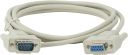
Null Modem Cable, 9-Pin PIn (Male) to 9-Pin Pin (Male)
Orderable10873
Serial Data Cable, 9-Pin Socket (Female) to 9-Pin Pin (Male)
Orderable
Common Accessories
(6)15966
Wall Charger with Barrel Plug
One charger or field cable is needed per base unit or when the radio is used on a datalogger's RS-232 port. The 15966 charger is typically used at the PC where ac power is available.
Orderable14291
Field Power Cable, 12 Vdc Plug to Pigtail
One charger or field cable is needed per base unit or when the radio is used on a datalogger's RS-232 port. The 14291 power cable terminates in a barrel plug on one end and two pigtails on the other end.
Orderable28767
868 MHz -3.65 dBd Omnidirectional 1/4 Wave Whip Antenna with RPSMA Plug
The 28767 is a no-gain 1/4 wave helical antenna with an RPSMA connector designed for use with radios operating at 855 to 880 MHz. The 28767 has an omnidirectional radiation pattern and is fully weatherized for indoor and outdoor use.
Limited availability21212
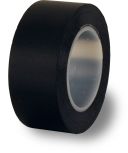
Black Cold Shrink Tape
The 21212 is a 10-ft roll of black self-vulcanizing tape. This cold shrink tape can help protect non-whip antenna connections in RF, cellular, or satellite networks.
Orderable18663
Null Modem Cable, 9-Pin PIn (Male) to 9-Pin Pin (Male)
This 1 ft, null modem cable has 9-pin connectors on both ends for connecting the datalogger's RS-232 port to a peripheral's RS-232 port. An interface such as the SC105 or SC932A is typically not required.
Orderable10873
Serial Data Cable, 9-Pin Socket (Female) to 9-Pin Pin (Male)
The 10873 is a serial cable that is useful for connecting the RS-232 port of the datalogger to the 9-pin RS-232 port of a computer. It is used with DTE devices, such as a PC or NL201.
Orderable
Replacement Parts
(5)193
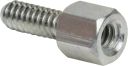
Spacer Jack for Screw #4-40
This spacer is needed if screws are used to secure the cable to the device.
OrderableSC12
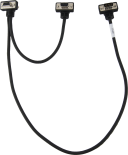
Robust CS I/O Cable, 2 ft
The SC12 is our standard cable for connecting the data logger's 9-pin serial I/O port to most peripherals with a 9-pin port. It is supplied with many of our standard communications peripherals. Its 9-pin pin (male) connector attaches to the data logger's CS I/O port, and the two 9-pin socket (female) connectors can attach to peripherals or interfaces.
Orderable17648
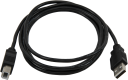
USB Cable, Type A Pin (Male) to Type B Pin (Male), 6 ft
The 17648 is a USB cable for attaching our products to a USB port on a PC. It has a type A pin (male) connector for connecting to the PC's USB port and a type B connector for connecting to the Campbell Scientific device.
Orderable505
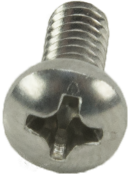
Screw #6-32 x .375 Pan Phillips
These screws, along with the 6044 grommets, are commonly used together to secure our equipment to the backplates of our enclosures.
Orderable6044
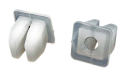
Grommet for #6 or #8 Screw
These grommets are commonly used with the 505 screws to secure our equipment to the backplates of our enclosures.
Orderable
Compatibility
The RF422 is over-the-air compatible with other RF422-based products. The RF422 can only communicate wirelessly with other RF422 radios and other Campbell Scientific products that have the "-RF422" option.
Data Logger Considerations
The RF422 attempts to optimize communications for PakBus-capable devices. However, it will also automatically operate in a transparent, broadcast serial mode when PakBus is not detected. The RF422 is compatible with all Campbell Scientific data loggers. When the RF422 is connected to a data logger's DB9 RS-232 port, a 18663 null modem cable will likely be needed. When the RF422 is connected to a data logger's CS I/O port, use the supplied SC12 cable. For legacy "mixed array" data loggers (such as the CR10), you can use an SC932A or SC105 to connect the data logger's CS I/O port to the RF422's RS-232 port.
Related Resources
Documents
- Brochure
RF422 868 MHz Radio
March 2026
View Document - Manual
RF407-Series Spread Spectrum Radios
March 2026
View Document - Technical Paper
The Link Budget and Fade Margin
September 2016
View Document - Technical Paper
Line of Sight Obstruction
October 2016
View Document
Showing 4 of 8 results
See all Documents