SDM-IO16A
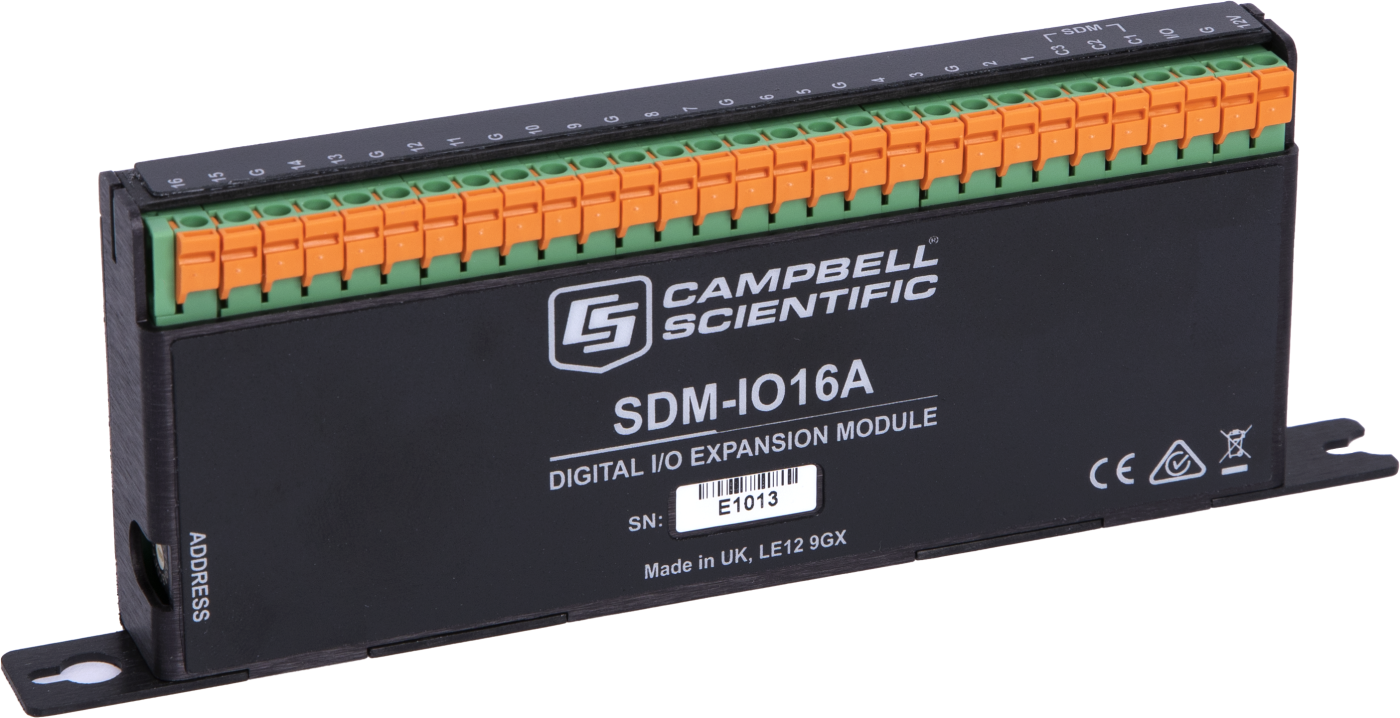
SDM-IO16A
Orderable16-Channel Input/Output Module
Overview
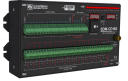
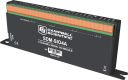
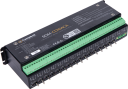
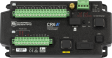
The SDM-IO16A has 16 ports that expand the digital input and/or output capability of Campbell Scientific data loggers. This module offers similar functionality to the control ports of the majority of Campbell Scientific data loggers.
The SDM-IO16A was designed to replace the SDM-IO16. The SDM-IO16A is more compact in comparison and has gas-discharge tubes fitted on all inputs for improved surge protection. It is fully software-compatible but also includes an option to run in a special high-speed mode that allows pulse measurements up to 8 kHz on all channels and four times more resolution on some timing measurements.
Key Advantages
Technical Description
When a port is configured as an input, it can measure the logical state of the port, count pulses, and measure the frequency of—and determine the duty cycle of—signals applied to the port. In pulse-counting mode, there is also an option to enable switch-debounce filtering so the unit can accurately count switch-closure events. The SDM-IO16A measures the frequency of signals by measuring the time between pulses, thereby giving relatively high-resolution measurements even for low-frequency signals.
The module can also be programmed to generate an interrupt signal to the data logger when one or more input signals changes state.
When configured as an output, each port can be set to 0 or 5 V by the data logger. In addition to being able to drive normal logic-level inputs, when an output is set HI, a "boost" circuit allows direct control of some low-voltage valves and relays. (Refer to the Specifications section on the web page.)
The SDM-IO16A is a synchronously addressed data logger peripheral. Data logger control ports 1, 2, and 3 are used to address the SDM-IO16A and exchange digital data with it. This module uses advanced error-checking techniques to ensure correct transmission of data to and from the module. Up to 16 SDM-IO16As may be addressed, making it possible to control a maximum of 256 ports from the first three data logger control ports.
Benefits
- 16 digital I/O ports
- When configured as an input, each port can monitor logic state, count pulses, measure signal frequency, and determine duty cycle
- Consumes less than 1 mA power in most applications
- Compact package with spring-loaded, vibration-resistant terminals
- Connects to the data logger via three ports that can be shared with up to 15 other SDM devices
- Multiple different functions for programming each input and different function assignments for different ports on the same module
- Capability of each terminal to directly drive low-voltage valves or relays
- I/O lines protected against high-level surges with gas discharge tubes
Specifications
- Function
- Expands the digital input and/or output capability of a data logger.
- Operating Temperature
- -40° to +70°C
- Number of Channels
- 16
- SDM and I/O Port
- 0/5 V logic-level ports
(for connecting to the data logger’s control/SDM ports)
- EMC Status
- Complies with EN 61326:2013
- Operating Voltage
- 12 Vdc
(nominal 9 to 18 V)
- Minimum Frequency
- 0 Hz is reported if there are less than two high-to-low signal transitions in the measurement interval.
- Minimum Pulse Width
- 244 μs
(61.04 μs in high-speed mode)
- Default Switch Debounce Timing
- Input and ground must remain closed for 3.17 ms then remain open for 3.17 ms to be counted as a closure.
(0.7925 ms in high-speed mode)
- Internal Clock Accuracy
- ±0.01%, worst case
(-40° to +70°C)
- Maximum Pulse Measurement Interval
- 4096 seconds
(1024 seconds in high-speed mode)
- Dimensions
- 188 x 64 x 22 mm
(7.4 x 2.5 x 0.9 in)
- Weight
- 175 g
(6.2 oz)
Current Drain
- -NOTE-
- Current consumption is roughly proportional to input-signal frequency and number of ports used.
Current drawn from any output must be added to the quiescent level to obtain the total current drain.
- Typical Standby
- 600 µA
(all ports high, no load, excludes pulse counting)
- Maximum
- 3 mA
(active with all 16 ports counting pulses at 2 kHz and no output load)
4.5 mA(in high-speed mode, counting up to 8 kHz)
Maximum Frequency (with 50/50 duty cycle)
- Switch Debounce-Mode Turned Off
- 2.0 kHz on all channels simultaneously
(8.0 kHz in high-speed mode)
- Default Switch Debounce-Mode Enabled
- 150 Hz on all channels
Output
- -NOTE-
- For information regarding the output current at other voltages, refer to the product manual.
- ON/HI Voltage (no load)
- 5 V
(nominal)
4.5 V(minimum)
- OFF/LO Voltage (no load)
- 0 V
(nominal)
0.1 V(maximum)
- Sink Current
- Output will sink 8.6 mA from a 5 V source.
- Source Current
- 42 mA
(@ 3 V)
133 mA short-circuited to ground
Input
- Voltage
- 4.0 V minimum threshold
(high)
1.0 V maximum threshold(low)
- Protection
- Input clamped at -0.6 V and +5.6 V relative to ground
(via a 33 Ω resistor to withstand a continuous current flow of 200 mA)
- Impedance
- Biased to +5 V relative to ground
(by a 100 kohm resistor)


Common Accessories
(2)CABLE5CBL
5-Conductor 22 AWG Cable with Drain
The CABLE5CBL is a 22 AWG, five-conductor cable with a Santoprene jacket and an aluminum Mylar shield. By default, the conductors are stripped and tinned. The cable can also be fitted with a connector for attachment to a prewired enclosure.
Orderable32505
SDM Jumper Wire Kit (quantity of 4)
The 32505 is a kit that can help you connect up to four SDM modules that are mounted next to each other.
Orderable
Replacement Parts
(2)505
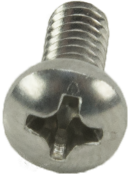
Screw #6-32 x .375 Pan Phillips
These screws, along with the 6044 grommets, are commonly used together to secure our equipment to the backplates of our enclosures.
Orderable6044
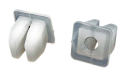
Grommet for #6 or #8 Screw
These grommets are commonly used with the 505 screws to secure our equipment to the backplates of our enclosures.
Orderable
Compatibility
Software Requirements
Support for all the functions requires CRBasic’s SDMIO16 instruction.
Power Considerations
In input mode, the power consumption varies from 600 µA to 4.5 mA depending on the mode and input frequencies. The data logger's rechargeable power supply can often power the SDM-IO16A in these pulse-counting or status-input applications. However, when the SDM-IO16A is used in an output mode and is driving significant loads, Campbell Scientific recommends using an external power supply.
Enclosure Considerations
The SDM-IO16A requires a desiccated, non-condensing environment; a Campbell Scientific enclosure is recommended. An integral mounting bracket, grommets, and screws attach the SDM-IO16A to the backplate of a Campbell Scientific enclosure.
Sensor Cabling
This cabling is typically sold as a part of the sensors. If cabling is not provided, you can use pn 9922 two-conductor cable. When the distance between the data logger and the SDM-IO16A is significant, verify that the sensor cable has adequate resistance/capacitance specifications. Also, avoid sensors with completion resistors in their pigtails; it's preferable to have the completion resistors at the data logger.
Related Resources
Documents
- Manual
SDM-IO16A 16-Channel Input/Output Expansion Module
September 2020
View Document - Brochure
SDM-IO16A 16-Channel Input/Output Module
March 2026
View Document - Compliance
SDM-IO16A UK Declaration of Conformity
View Document - Compliance
SDM-IO16A FCC Supplier Declaration of Conformity and FCC Statement
March 2021
View Document
Showing 4 of 5 results
See all Documents