Case Studies
Real-world project outcomes and implementation stories from Campbell Scientific customers
Florida: Crack Monitoring at a Historic Site
Campbell Scientific equipment helps to preserve and restore a historic monument
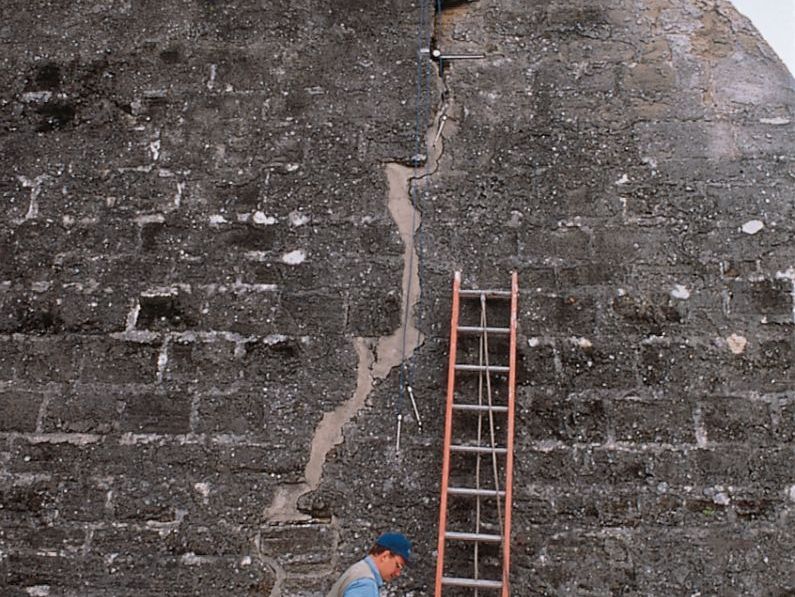
The Castillo de San Marcos National Monument, St. Augustine, Florida, is a 17th Century historic, cultural, structural, and civil engineering landmark. The Park Superintendent, Gordie Wilson, together with the Southeast Region of the National Park Service, has commenced a long-range monitoring effort at the fort. The goal is to better understand the causes of movement—and the resulting cracks—that have plagued areas of the fort walls for two hundred years.
The fort’s bastions are earthen-filled, masonry ramparts, constructed on shallow foundations. Two of the four bastions have evidenced cracks since the early 1800s. The fort’s foundations ought to be structurally sound according to an extensive investigation of both the foundations and the soil bearing capacity. An emerging theory postulates that the wall construction is near its structural limit in retaining the earth fill. Rainwater infiltration may increase the internal load on the walls, causing the structure to move. A design team was formed to investigate this theory. Headed by architects Grieves Worrall Wright & O’Hatnick, the team proposed that the park monitor:
- Existing cracks in three dimensions
- Tilt of the large segments between the major cracks
- Change of soil moisture with in the bastion at two levels, one near the surface and one 16 feet deep
- Weather conditions at the site to assess their impact on geotechnical activity
Monitoring equipment was assembled from several vendors. Campbell Scientific provided the datalogger, multiplexers, weather stations, and soil moisture probes. The equipment was integrated with crack and tilt sensors manufactured and installed by Geokon (Lebanon, NH). AMJ Equipment (Lakeland, FL) and PSI Engineering (Jacksonville, FL) provided technical and installation assistance. To reduce the installation’s aesthetic impact on the park, cables were concealed in custom conduit with the help of the park’s maintenance staff.
The sensors are measured and the data are stored by the CR10X at 5 a.m. and 5 p.m. On a quarterly basis, the data stored in the CR10X is downloaded via phone modem to computers located in the offices of the engineers and architects for analysis and interpretation. The project is scheduled to collect data for five to ten years.