237-L
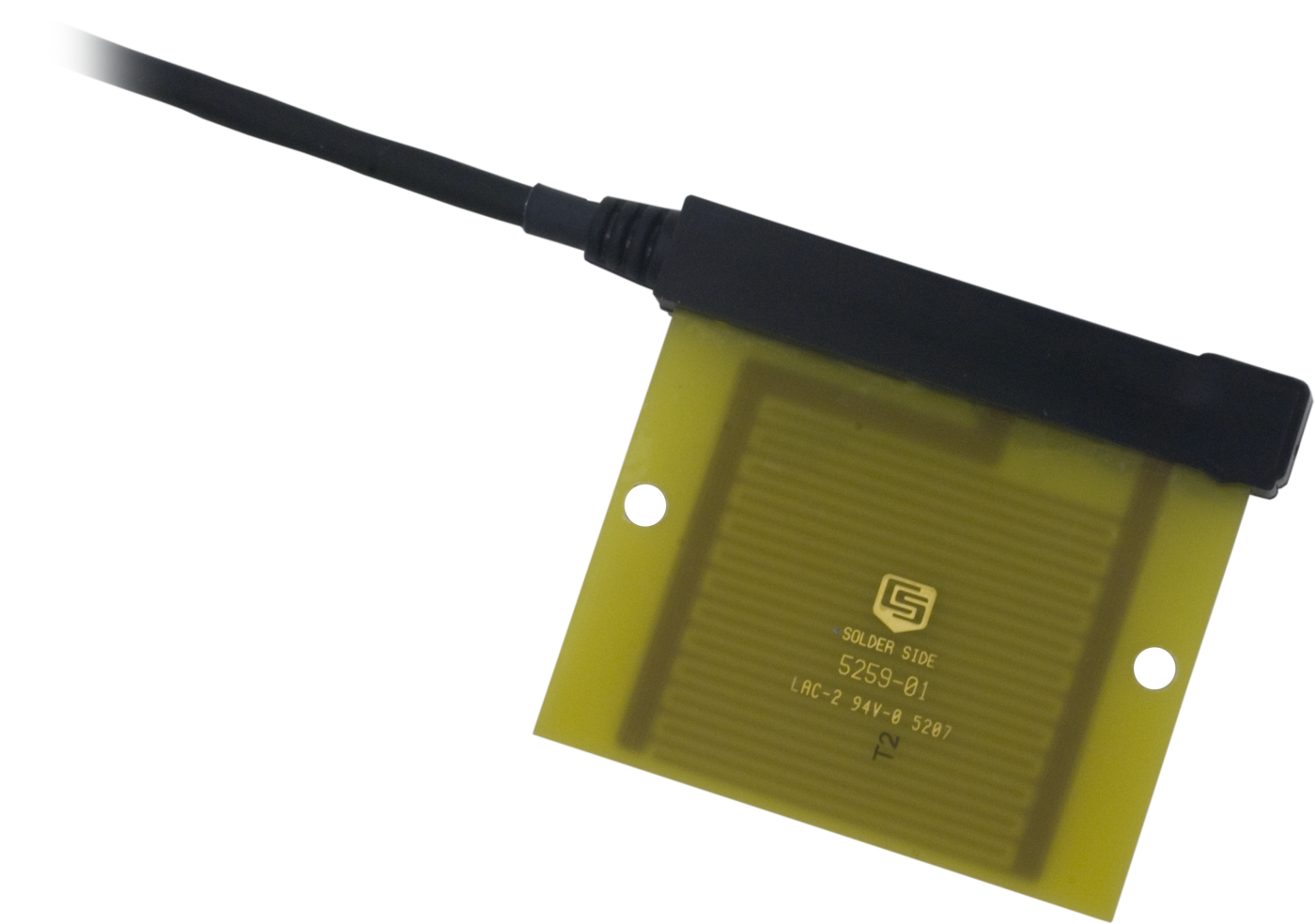
237-L
RetiredLeaf Wetness Sensor
No longer available to order
This product is retained for service, documentation, and compatibility information.
- Model:
- 237-L
- Item Number:
- 8716
- Warranty:
- 1 year
Overview
The 237 measures leaf wetness by determining the electrical resistance on the surface of the sensor. (A wet surface is less resistant.) It is primarily used to determine the percentage of time that a leaf surface is wet, versus the time it is dry.
Note: The 237 is designed for short duration ac excitation. The sensing grid may become damaged by dc excitation or continuous ac excitation.
Key Advantages
Compatible with most Campbell Scientific data loggers
Technical Description
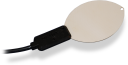
The 237 consists of a circuit board with interlacing gold-plated fingers. Condensation on the sensor lowers the resistance between the fingers, which is measured by the data logger.
Droplets must touch two fingers simultaneously to change the sensor resistance. For this reason, the 237 is typically coated with flat latex paint, which spreads water droplets.
The color and type of paint affect sensor performance. Campbell Scientific supplies the sensor unpainted, allowing customers to determine the appropriate paint to apply to the sensor's surface. The appropriate pigmentation should closely emulate the properties of a typical leaf.
For more information on the effects of paint color and sensor angle on sensors of this type, see Gillespie, T.J., & Kidd, G.E., 1978. Sensing duration of leaf moisture resistance using electrical impedance grids. Canadian Journal of Plant Science 58: 179-187.
Calibration
The resistance of the sensor at the wet/dry transition point should be determined. A sharp change in resistance occurs in the wet-dry transition on the uncoated sensor; normally the transition is between 50 and 200 kohm. Coated sensors have a poorly defined transition, which normally occurs from 20 kohm to above 1,000 kohm. For best results, the leaf wetness sensor should be field calibrated because the transition point will vary for different areas and vegetation.
Benefits
- Sensor is shipped unpainted so customer can choose appropriate surface finish that best fits the application
- Imitates characteristics of a leaf
Specifications
- Resistance at Wet/Dry Transition
- Normally 50 and 200 kohm
(uncoated sensor)
Normally 20 to 1000 kohm(coated sensor)
- Operating Temperature Range
- 0° to 100°C
- Short-Term Survivability Temperature Range
- -40° to +150°C
Sensor may crack when temperature drops below -40°C. - Painting
- Sensor is shipped unpainted so customer can choose appropriate surface finish to best match the application.
- Hole Spacing
- 6.73 cm
(2.65 in.)
- Hole Diameter
- 0.54 cm
(0.213 in.)
- Dimensions
- 7.6 x 7.1 x 0.64 cm
(3.0 x 2.75 x 0.25 in.)
- Weight
- 91 g
(3 oz) with 3.05 m (10 ft) cable
Similar Products
(1)
Compatibility
Data Logger Considerations
The 237 requires one single-ended analog input and one switched excitation channel for measurement.