
How We Can Help You
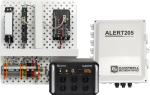
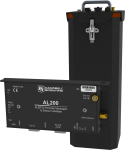
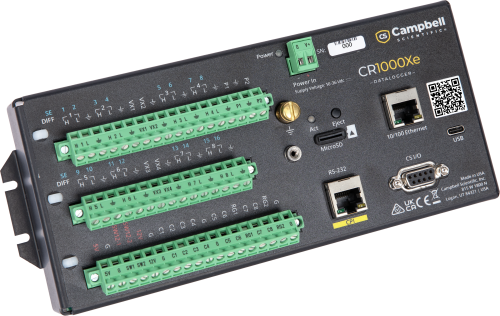
Campbell Scientific designs and builds standard ALERT, ALERT2, hybrid ALERT, and customized flood warning systems. This includes a turn-key transmitter packaged in a traditional ALERT-style canister for standpipe installation. The data loggers at the heart of our flood warning systems have been proven over decades in the harshest, most remote conditions. You can add our systems to an existing network of stations, or we can customize a flood warning system for your unique application.
Note: ALERT2 is a trademark of the National Hydrologic Warning Council.
To see how our systems meet your application needs, review our case studies. »

Customize a System
In addition to our standard systems available, many of the systems we provide are customized. Tell us what you need, and we’ll help you configure a system that meets your exact needs.
Related Product Categories

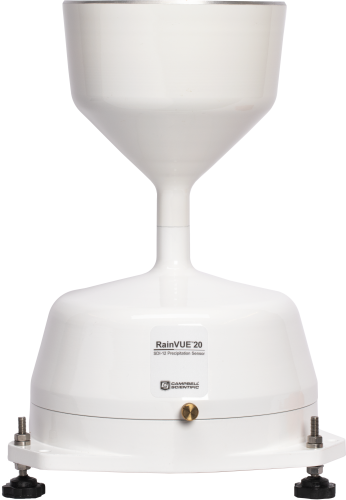
More Details about Our Flood Warning Systems (ALERT/ALERT2) Systems
ALERT System
Our ALERT systems match all standard ALERT protocols, including ALERT2. Our data loggers, proven in thousands of applications worldwide, provide multiple types of inputs (pulse, analog, SDI-12, and others), which allow you to use almost any type of water-level sensor (including pressure transducers, shaft encoders, bubblers, and ultrasonic distance sensors). The onboard algorithms are able to calculate hourly and daily minimums, maximums, averages, totals, flow, or any other statistical value. These values can be stored onboard the system, providing you with a backup of the data. A solar panel provides continuous charge to the battery for your extended, unattended monitoring needs.
If you need additional sensors to measure soil moisture, water quality, or meteorological conditions, it is easy to integrate them. We can upgrade older systems—even those from other manufacturers—with the latest data logger and transmitter, often allowing you to use the same sensors and standpipe or enclosure.
ALERT2 Systems
The added performance of ALERT2 systems makes them a logical choice for new systems and for upgrading existing networks. The main advantage is the ability to have larger networks and greatly reduced data loss. When you upgrade an older ALERT network to ALERT2, you don't have to update the complete system all at once. Rather, you can complete the upgrade in phases to ease the cost and labor burdens. All the other functions and features of the original ALERT systems are still available with ALERT2.
Campbell Scientific equipment has been used for some of the largest and most widely used ALERT2 networks in the country. For an example of the performance of these systems, read the "Texas: Transitioning to ALERT2" case study.
Note: ALERT2 is a trademark of the National Hydrologic Warning Council.
Hybrid ALERT Systems
Our hybrid systems consist of an ALERT system integrated with additional sensors and communications peripherals. One or two radio frequencies can be used, depending on your needs. With a single frequency, two-way communications are avoided during storm events to allow more bandwidth for one-way ALERT communications. You may, however, choose to use two frequencies: one for ALERT and the other for a fully functional, two-way communications network. This provides the following inherent advantages:
- Retries of missed packets
- Diagnostics
- Clock synchronization
- Re-programming from the base station
- Historical data collection (no holes in the data)
- Interactive control capability
- Voice modem call-out of alarms
If you are able to measure additional parameters at your ALERT site, or to integrate ALERT capabilities with another type of measurement site, it may be easier for you to collaborate with another organization. Collaboration may help keep your costs down.
Customized Flood Warning Network Using LoggerNet Software
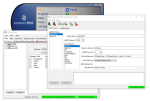
A flood warning network that uses LoggerNet software takes advantage of two-way RF communications and the latest in network management software. LoggerNet is a client/server software program used for managing large networks of monitoring stations. A LoggerNet-based system is a viable solution for flood warning applications for two reasons:
- The speed at which LoggerNet can poll multiple RF stations
- The speed and versatility with which LoggerNet can make the data available to multiple interested parties
When a "send data" command is broadcast to a group of remote stations, the stations transmit predefined data to the LoggerNet server in their own time window. Transmission windows can be as short as 100 ms, allowing multiple sites to be polled per second. As the data is collected, LoggerNet clients access it from LANs or via the Internet, making the data available to multiple users or agencies in near real time.
Other Resources and Options
To meet your application's specific needs, you can combine other resources and communications options with flood warning systems. It is common for local governments to combine resources to obtain the best possible system. In other situations, federal agencies are involved, which increases system coverage and robustness, and even helps with the budget. For example, GOES satellite transmitters can be added to stations to provide automated data archival through the National Weather Service (NOAA/NESDIS) and the U.S. Geological Survey (USGS). Multiple-purpose data-collection systems bring to bear the resources and expertise of environmental data experts.
Documents
Miscellaneous
Case Studies
The Panama Canal was using an outdated water-level system until the Panama Canal Authorities (ACP)......read more
In February of 2015, Campbell Scientific was awarded a bid to supply the Harris County......read more
Flooding is the number one natural cause of fatalities worldwide and was responsible for 6.8......read more
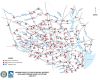
ALERT2 is a modern communication protocol that improves upon 40 years of tradition within the......read more
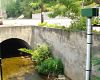
Hot Springs, Arkansas, is a history-rich city located adjacent to Hot Springs National Park. The......read more
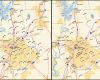
The Charlotte-Mecklenburg Flood Information and Notification System (FINS) consists of over 125 gaging stations spread......read more
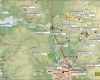
The National Weather Service (NWS) operates a network of automated flood-warning stations around Mount St.......read more
Networks using the ALERT protocol are designed to give immediate access to data that indicates......read more
Integrators and Consultants
Upcoming Events
-
2026 Association of State Floodplain Managers Conference
May. 31 - Jun. 4, 2026 | Milwaukee, WI
Articles and Press Releases
Privacy Policy Update
We've updated our privacy policy. Learn More
Cookie Consent
Update your cookie preferences. Update Cookie Preferences