|
Campbell Scientific's aquaculture monitoring systems generate labor and energy savings, limit disease and mortality, and increase yields by continuously monitoring and controlling water quality. Our systems consist of measurement and control units, water quality sensors, and communications devices for transmitting data and reporting site conditions. The versatility and reliability of our systems set them apart from other similar systems.
Our systems monitor and record water quality around the clock providing continuous data that can be used to identify trends and improve production. Almost any sensor can be used, including dissolved oxygen, temperature, pH, conductivity, salinity, turbidity, ORP, ammonia, flow, and level. Sensors can measure and store data at any interval you choose. Through the use of mathematical algorithms, you can store processed data in the units of your choice, simplifying data analysis.
Aerators, pumps, alarms, or other electrical devices can be controlled based on measured conditions or time. For example, aerators can be turned on (day or night) when DO measurements reach a preset value. Together with continuous monitoring, automated control keeps your system operating efficiently even when you are not around.
The availability of multiple communications options for transmitting data to the central computer also allows systems to be customized to meet exact needs. Options include radio, telephone, cell phone, voice-synthesized phone, satellite, and Ethernet. Systems can be programmed to send alarms or report site conditions by calling out to a computer, phones, radios, and/or pagers.
Our measurement and control units have proven their reliability in thousands of applications in climates worldwide making precise, reliable measurements on a wide variety of sensors. Since rechargeable batteries are used as a power source, systems can continue to measure and store time-stamped data and control on-site generators and other devices during power outages.
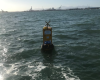
In ponds, our systems typically monitor dissolved oxygen and temperature. Amps or RPMs can also be monitored on motors to aid in detecting aerator failures. Our wireless, buoy-based systems facilitate installation and maintenance by eliminating the costs and hassles of cable. In a pond monitoring system, a CR1000 measurement and control unit (or other unit), housed in an environmental enclosure, measures sensors and controls aerators based on preset times or based on the concentration of dissolved oxygen, as measured by the sensors. Alarms are sent via pager, radio, or phone when oxygen levels reach preset danger levels or when amp or RPM sensors indicate aerator failure. PondView software allows you to view and control the status of your entire operation from your home or office.
A CR1000 (or other control unit) monitors dissolved oxygen, pH, temperature, flow, level, and other sensors. Based on those measurements (or preset times) valves, pumps, chemical injectors, aerators, and other devices are controlled to maintain appropriate water quality and quantity for the aquaculture operation. The control unit, its power supply, and communication devices are housed in an enclosure. Data is transmitted to the central computer for analysis. Status of the recirculating system can be monitored from the central computer.