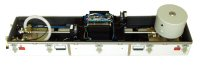
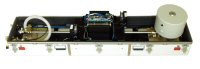
TGA100A

Trace Gas Analyzer System


The TGA100A has been superceded by the TGA200.

The TGA100A Trace Gas Analyzer measures trace gas concentration in an air sample using tunable diode laser absorption spectroscopy (TDLAS). This technique provides high sensitivity, speed, and selectivity. The TGA100A is a rugged, portable instrument designed for use in the field. Common applications include gradient or eddy covariance flux measurements of methane or nitrous oxide and isotope ratio measurements of carbon dioxide or water vapor. The TGA100A concentration measurements can be recorded with a Campbell Scientific datalogger, output as analog voltages, or saved to a PC's hard disk.

Measurement of Trace Gas Fluxes Using Micrometeorological Techniques

The TGA100A is ideally suited to measure fluxes of trace gases using micrometeorological techniques. In addition to its rugged design that allows it to operate reliably in the field with minimal protection from the environment, it also incorporates several hardware and software features to facilitate these measurements.

The TGA100A's sample rate, frequency response, sensitivity and selectivity are optimized for measuring trace gas fluxes using the eddy covariance (EC) method. Adding a CSI datalogger and a CSAT3 Sonic Anemometer provides a complete EC solution.

The TGA100A also supports the measurement of trace gas fluxes by the gradient method. A PC or datalogger can be used to control the switching valves and compute the mean concentration at one or multiple sites.

Trace Gas Species Options


The TGA100A can measure gases with absorption lines in the 3 to 10 micron range by selecting appropriate lasers, detectors, and reference gas. Lead-salt tunable diode lasers have a very limited tuning range, typically 1 to 3 cm-1 within a continuous tuning mode. In some cases more than one gas can be measured with the same laser, but usually each gas requires its own laser. The laser dewar has two laser positions available (four with an optional second laser mount), allowing selection of up to four different species by rotating the dewar, installing the corresponding cable, performing a simple optical realignment, and switching the reference gas.


The TGA100A can be configured to measure two or three gases simultaneously by alternating the spectral scan wavelength between two or three absorption lines. This technique requires that the absorption lines be close together (within about 1 cm-1), so it can be used only in very specific cases. The multiple scan mode is used to measure δ13C and δ18O isotope ratios in carbon dioxide or δ18O and δ D isotope ratios in water vapor by tuning each scan to a different isotopomer.

The multiple scan mode may also be used to measure some other pairs of gases, such as carbon monoxide and nitrous oxide, or nitrous oxide and methane, but the measurement noise will be higher than if a single gas is measured. For measurements of a single gas, the laser wavelength is chosen for one of the strongest absorption lines of that gas. Choosing a laser that can measure two gases simultaneously involves a compromise. Weaker absorption lines must be used in order to find a line for each gas within the laser’s narrow tuning range.

Operating Environment

The TGA's rugged enclosure and simple, robust, optical design allow it to maintain alignment and operate reliably in the field. The optics and electronics are housed in an insulated fiberglass enclosure that shock mounts the optical bench and dampens temperature variations. If the TGA100A is operated in an open environment, the optional TGA100A Insulated Enclosure Cover and TGA100A Temperature Controller are recommended.

Laser Cooling Options

The optical source for the TGA110A is a lead-salt laser that operates between 80 and 140 K, depending on the individual laser. Two options are available to mount and cool the laser: the TGA100A LN2 Laser Dewar and the TGA100A Laser Cryocooler System.

TGA100A LN2 Laser Dewar

The TGA100A LN2 Laser Dewar holds 10.4 liters of liquid nitrogen, is mounted inside the analyzer enclosure, and includes a laser mount that can accommodate two lasers. A second laser mount can be added to accommodate an additional two lasers.

The hold time of the TGA100A LN2 Laser Dewar depends on the laser's operating temperature and the thermal conductance between the laser mount and the liquid nitrogen tank. The thermal conductance is set at the factory, depending on the laser's operating temperature, to provide at least 5 days operational hold time.

TGA100A Laser Cryocooler System

The TGA100A Laser Cryocooler System option uses a closed-cycle refrigeration system to cool the laser without liquid nitrogen. It includes a vacuum housing mounted inside the analyzer enclosure, a compressor mounted outside the enclosure, and 3.1 m (10 ft) flexible gas transfer lines (longer lines are also available). The TGA100A Laser Cryocooler System will operate continuously, with only periodic reevacuation needed to maintain the insulating vacuum.


Similar to the TGA100A LN2 Laser Dewar, the TGA100A Laser Cryocooler System can accommodate one or two lasers, or up to four lasers with the optional second laser mount. The compressor must be sheltered and maintained at 10° to 35°C, and the gas transfer lines must be kept above 5°C. The TGA100A Laser Cryocooler System option adds 2.5 cm (1 in) to the length of the TGA100A enclosure.

References to Example Applications

Campbell Scientific Trace Gas Analyzers have been used in the field for more than a decade to measure trace gas fluxes. To review a brief list of published results, visit TGA References.

Features

  • RETIRED
  • Measures gas concentration using tunable diode laser absorption spectroscopy (TDLAS)
  • Designed for field use
  • Ideal for measuring fluxes of trace gases using gradient or eddy covariance techniques
  • Measures carbon isotope ratios and oxygen isotope ratios in CO2
  • Measures oxygen isotope ratios and hydrogen isotope ratios (deuterium) in water vapor

Specifications

Measurement Specifications

The typical 10 Hz concentration measurement noise is given as the square root of the Allan variance with no averaging (i.e. the two-sample standard deviation. This is comparable to the standard deviation of the 10 Hz samples calculated over a relatively short time (10 s). The typical 30-minute average gradient resolution is given as the standard deviation of the difference between two intakes, averaged over 30 minutes. Values shown in Table OV7.7-1 are for ambient concentrations.

TABLE OV7.1-1. Typical Concentration Measurement Noise

Gas

Wave number (cm-1)

10 Hz Noise (ppbv)

30-min Gradient Resolution (pptv)

Nitrous Oxide

N2O

2208.575

1.5

30

Methane

CH4

3017.711

7

140

Ammonia

NH3

1065.56

6

200

Carbon Monoxide

CO

2176.284

3

60

Nitric Oxide

NO

1900.08

13

260

Nitrogen Dioxide

NO2

1630.33

3

60

Sulfur Dioxide

SO2

1366.60

25

500

The TGA100A multiple-scan mode can be used to measure suitable pairs of gases. Typical performance for some examples is given in Table OV7.1-2.


TABLE OV7.1-2. Typical Concentration Measurement Noise

Gas

Wave number (cm-1)

10 Hz Noise (ppbv)

30-min Gradient Resolution (pptv)

Nitrous Oxide and Methane

N2O

1271.077

7

140

CH4

1270.785

18

360

Nitrous Oxide and Carbon Monoxide

N2O

2190.350

5

100

CO

2190.018

5

100

N2O

2203.733

1.8

35

CO

2203.161

10

200

Nitrous Oxide and Carbon Dioxide

N2O

2243.110

2

40

CO2

2243.585

800

16000

The multiple-scan mode may also be used to measure different isotopomers of the same gas. Isotope ratio measurements are typically given in delta notation:


where Rm is the ratio of the isotopomer concentrations measured by the TGA100A, Rstd is the standard isotope ratio, and δ is reported in parts per thousand (per mil). Typical isotope ratio performance is given in Table OV7.1-3. The calibrated noise assumes a typical sampling scenario: two air sample intakes and two calibration samples measured in a 1 minute cycle. It is given as the standard deviation of the calibrated air sample measurements.

TABLE OV7.1-3. Typical Isotope Ratio Measurement Noise

Analyzer Physical Specifications


  • Length: 211 cm (83 in)
  • Width: 47 cm (18.5 in)
  • Height: 55 cm (21.5 in)
  • Weight: 74.5 kg (164 lb)

Optional Cryocooler Compressor


  • Length: 31 cm (12 in)
  • Width: 45 cm (18 in)
  • Height: 38 cm (15 in)
  • Weight: 32 kg (71 lbs)

Power Requirements


  • Analyzer: 90-264 Vac, 47-63 Hz, 50 W (max) 30 W (typ)
  • Optional Heater: 90-264 Vac, 47-63 Hz, 150 W (max)
  • Optional Cryocooler Compressor: 100, 120, 220, or 240 Vac, 50/60 Hz 500 W