Product Line

Documents
Brochures
Technical Papers
Frequently Asked Questions
Number of FAQs related to Communications: 7
Expand AllCollapse All
-
Be ready to provide information about the measurement system, such as data logger, power supply, and telemetry preferences. Depending on the system, there may be questions about the distance between measurement stations, type of topography, and location of each station. It may also be helpful to provide maps of the measurement area.
-
In its simplest form, a server hears requests and delivers answers. In the case of RTMC Web Server, it hears requests from PCs, and it delivers files using Hypertext Transfer Protocol (HTTP), the language of the Internet.
-
We offer storage modules, displays, and PDA options. In addition, a data logger can be connected to a PC or laptop computer. For more information, review the "Data Storage & Retrieval Peripherals" brochure.
-
Campbell Scientific data loggers do not directly support LonWorks, but an industrial protocol converter can be used to add a data logger to a new or existing LonWorks network. The protocol converter sits between the data logger and the network, and it converts LonWorks requests to a protocol supported by the data logger, such as Modbus, DNP3, SNMP, or others.
-
Campbell Scientific data loggers do not directly support BACnet, but an industrial protocol converter can be used to add a data logger to a new or existing BACnet network. The protocol converter sits between the data logger and the network, and it converts BACnet requests to a protocol supported by the data logger, such as Modbus, DNP3, SNMP, or others.
For more information about BACnet, see the “BACnet to Modbus/Modbus to BACnet Protocol Conversion” application note.
-
Campbell Scientific data loggers do not directly support Profibus, but an industrial protocol converter can be used to add a data logger to a new or existing Profibus network. The protocol converter sits between the data logger and the network, and it converts Profibus requests to a protocol supported by the data logger, such as Modbus, DNP3, SNMP, or others.
-
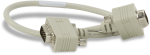
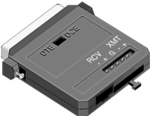
Most third-party modems require a null modem cable, SC105, SC110 cable, or SC932A to interface with a data logger. Many modems manufactured by Campbell Scientific can connect directly to a data logger’s CS I/O port using an SC12 or serial cable.
Privacy Policy Update
We've updated our privacy policy. Learn More
Cookie Consent
Update your cookie preferences. Update Cookie Preferences